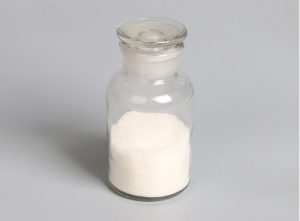
In municipal and heavy industrial sectors, optimizing solid-liquid separation and maximizing water recycling efficiency are critical for operational uptime and environmental compliance. Polyacrylamide (PAM) stands as the ultimate industry-standard flocculant. Chemically identified under CAS No. 9003-05-8, PAM is available in Cationic (CPAM), Anionic (APAM), and Non-ionic (NPAM) forms to neutralize varying particle surface charges. By bridging suspended particles together into massive, easily filterable macros-flocs, our premium PAM variants ensure crystalline water clarity and reduced sludge volume with remarkably low dosing thresholds.
Technical Product Specifications
| Property / Parameter | Standard Specification Range |
|---|---|
| Chemical Name | Polyacrylamide (PAM) |
| CAS Number | 9003-05-8 |
| Molecular Weight (Million) | 3.0 – 22.0 million (Grade & Ion-type dependent) |
| Appearance | White granular powder / clear dense emulsion |
| Solid Content (%) | ≥ 88.0% (Powder form) |
| Degree of Ionization (%) | 5% – 80% (Customizable Cationic/Anionic charge density) |
| Dissolving Time | ≤ 60 mins (Anionic/Non-ionic) | ≤ 45 mins (Cationic) |
| Residual Monomer (%) | ≤ 0.05% (Drinking water grades under ≤ 0.02%) |
Why Choose Our PAM Polymers?
- ✓ Rapid Flocculation & Sedimentation: The high molecular weight polymer chains feature optimized charge distribution to accelerate particle collisions, resulting in rapid settling times and reduced clarifier workloads.
- ✓ Superior Sludge Cake Dryness: Our Cationic PAM line achieves optimal moisture expulsion in centrifuge, belt-press, and filter-press installations, lowering downstream cake weight and cutting landfill disposal costs.
- ✓ Excellent Shear Stability & Dispersion: Tailored to resist mechanical degradation under high pump shear, our granulated grains disperse evenly in dissolution tanks, avoiding standard fish-eye clumping issues.
Primary Applications
Our wide spectrum of ionic PAM formulations supports targeted separation tasks across clean water and chemical wastewater setups:
Municipal Wastewater & Dewatering
Cationic PAM (CPAM) serves as the primary flocculant for organic-heavy sludges, optimizing belt-press operations and municipal digestion mud processing.
Mining, Metallurgical & Coal Washing
Anionic PAM (APAM) provides high structural charge bridging to clarify inorganic slurrified mining streams, recovering process water from thickener overflows.
Paper, Textile & Industrial Processing
Highly effective as a fiber retention aid in papermaking, dye-clarification in textile effluent treatment plants, and raw water clarifying under extreme pH variables.
Quality Assurance & Global Compliance
As a leading international supplier of water soluble polymers, we understand that raw material chemical consistency, proper molecular weight scaling, and strict regulatory tracking directly safeguard your processing plant metrics. Our state-of-the-art polymer chemical plants run under stringent management guidelines to meet strict international frameworks and support flawless cross-border transit:
- Advanced Laboratory Analytical QC: Every commercial batch of our polyacrylamide powder undergoes exhaustive testing—including Brookfield solution viscosity validation, precise charge density titration, and high-performance liquid chromatography (HPLC) tracking to enforce trace residual monomer ceilings under local safety criteria.
- Comprehensive Document Validation: All global shipments are fully backed by up-to-date tracking and technical supporting records. This includes comprehensive multilingual GHS Safety Data Sheets (SDS), detailed Certificates of Analysis (CoA), and regulatory compliance declarations matching EU REACH protocols and global environmental benchmarks.
- Heavy-Duty Moisture Protection Logistics: To fully prevent premature material clumping or ambient humidity absorption across long maritime trade routes, we package our products in multi-wall kraft paper bags (25kg) lined with protective dual PE sheets or robust bulk big jumbo supersacks (FIBCs).
⚠ Storage & Handling Guidelines
Maintaining correct warehouse parameters is necessary to secure the long-term dissolving performance of your Polyacrylamide powder. Because polymer molecules absorb moisture readily, sub-optimal environments will ruin powder flow traits and degrade product chain lengths.
- • Warehouse Climate Control: Store the product inside a completely cool, dry, and shaded warehouse. Keep storage rows isolated from direct moisture exposure, solar heating, steam conduits, open flames, and aggressive chemical raw materials.
- • Spill & Safety Hazards: Polyacrylamide solutions are exceptionally slippery. Clean up any trace powder leaks or spills immediately with dry industrial vacuums or absorbents before washing with water to avoid extreme workplace falling risks.
- • Inventory Stacking Life: Under appropriate sealed warehouse storage, our premium PAM granules carry a certified shelf life of 24 months from the date of manufacture. Following a strict First-In, First-Out (FIFO) material rotation system is highly advised to optimize system dissolution rates.
Frequently Asked Questions
How do I determine whether my plant requires Anionic, Cationic, or Non-ionic PAM? +
What is the optimal preparation concentration and method for dry PAM powder? +
What causes over-dosing of Polyacrylamide, and how can it harm operations? +
What pipe and tank materials should be utilized for dosing networks? +
Partner with a Reliable Chemical Supplier
We supply industry-grade, high-purity Polyacrylamide (PAM) water-soluble flocculants carefully refined to meet tight performance parameters. Available in custom charge densities across anionic, cationic, and non-ionic powder or emulsion configurations to perfectly match your engineering setup.