
In modern tire manufacturing and industrial rubber processing, achieving the ideal balance between rapid curing rates and superior mechanical properties is critical. As essential Rubber Chemicals, rubber accelerators play a decisive role in reducing vulcanization time, lowering energy consumption, and enhancing the overall durability of finished rubber products. Without effective accelerator systems, sulfur vulcanization alone would require excessively high temperatures and prolonged heating cycles, leading to thermal degradation of the elastomer matrix.
Among the wide range of rubber additives available today, thiazole and sulfenamide accelerators—specifically MBT, MBTS, and CBS—remain the global industry standard for high-performance rubber compounding across automotive, mining, construction, and consumer goods sectors.
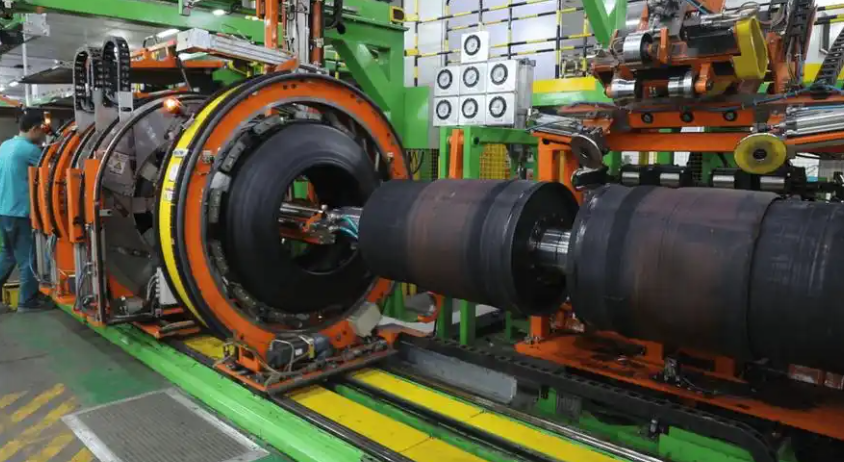
How Thiazole & Sulfenamide Accelerators Work in Sulfur Vulcanization
During the vulcanization process, accelerators react with elemental sulfur and activators (typically zinc oxide and stearic acid) to form active sulfurating complexes. These complexes rapidly attach to the unsaturated double bonds of polymer chains such as Natural Rubber (NR), Styrene-Butadiene Rubber (SBR), Nitrile Rubber (NBR), and EPDM.
By controlling the cleavage rate of the accelerator molecule, formulators can precisely govern the induction period (scorch time) and the subsequent cross-linking speed. Furthermore, CBS and MBTS promote a higher ratio of monosulfidic and disulfidic cross-links over polysulfidic links, which directly translates into superior heat-aging resistance, lower compression set, and minimized reversion during over-curing.
Understanding the Core Rubber Accelerators: MBT, MBTS, and CBS
Selecting the right primary accelerator directly impacts processing safety and final vulcanizate elasticity. Here is how the three most widely used accelerators function in industrial rubber formulations:
As a semi-ultra primary accelerator, MBT offers a fast curing rate across a wide vulcanization temperature range (140°C–180°C). It exhibits a flat curing curve, meaning physical properties remain stable even if curing time varies slightly. It is widely utilized in NR, SBR, NBR, and EPDM for manufacturing bias tires, rubber belts, hoses, and footwear.
MBTS provides much better processing safety and higher scorch resistance compared to MBT, as its disulfide bond remains inactive at lower mixing temperatures. Once vulcanization temperature is reached, it delivers a steady, reliable cure rate, making it ideal for thick rubber articles, tire carcasses, inner tubes, and molded rubber goods.
Known for its exceptional delayed action and rapid curing speed once activated, CBS is the preferred choice for radial tire treads and high-load industrial rubber components. It imparts high tensile strength, high modulus, and superior abrasion resistance to vulcanizates without risking premature scorching during high-shear Banbury mixing.
Technical Specifications Comparison: MBT vs. MBTS vs. CBS
To assist R&D engineers and procurement managers in selecting the optimal additive, the table below outlines the key technical parameters of our standard-grade accelerators:
| Product Name | CAS No. | Initial Melting Point | Scorch Safety | Primary Applications |
|---|---|---|---|---|
| MBT | 149-30-4 | ≥ 170.0 °C | Moderate | Tires, rubber shoes, hoses, general rubber goods |
| MBTS | 120-78-5 | ≥ 164.0 °C | High | Tire carcasses, inner tubes, thick molded parts, cables |
| CBS | 95-33-0 | ≥ 98.0 °C | Very High (Delayed) | Radial tire treads, heavy-duty conveyor belts, shock absorbers |
Selection Guide: How to Choose Between MBT, MBTS, and CBS
Choosing the right accelerator depends heavily on your processing equipment, compound viscosity, and end-product performance requirements:
- Choose CBS for High-Speed Extrusion & Radial Tires: If your compound undergoes intense heat generation during internal mixing or continuous extrusion, CBS provides the longest scorch delay followed by a rapid, high-modulus cure.
- Choose MBTS for Thick-Walled Molded Goods & Inner Tubes: When molding thick rubber blocks, bridge bearings, or butyl/NR inner tubes, MBTS ensures heat penetrates evenly to the core before cross-linking begins, preventing surface scorching and internal porosity.
- Choose MBT for Cost-Effective General Rubber Products: For footwear soles, rubber mats, and low-temperature curing applications where extreme scorch delay is unnecessary, MBT delivers fast cycle times at a highly economical cost.
Key Industrial Applications & Formulation Synergy
Integrating high-purity thiazole and sulfenamide accelerators into your rubber compounds delivers measurable production and performance advantages across multiple sectors:
Reliable Bulk Supply, Packaging & Strict Quality Control
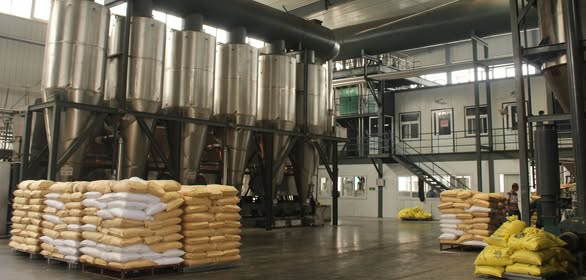
As a comprehensive global supplier of Rubber Chemicals, Plasticizers, and Water Treatment Chemicals, we understand that batch-to-batch consistency is vital for uninterrupted production lines. Our MBT, MBTS, and CBS accelerators are available in dust-free powder, oil-treated powder, and granular (pre-dispersed masterbatch) forms to ensure clean workshop handling and uniform dispersion.
- Standard Export Packaging: 25 kg kraft paper bags lined with PE film, or 500 kg / 1000 kg jumbo bags (palletized and shrink-wrapped for safe container shipping).
- Quality & Regulatory Compliance: Every shipment is accompanied by a Certificate of Analysis (COA) verifying melting point, ash content, heating loss, and sieve residue, fully compliant with ISO 9001 and EU REACH standards.
Frequently Asked Questions (FAQ)
Q1
What is the typical dosage of MBT, MBTS, or CBS in rubber formulations?
In standard Natural Rubber (NR) and SBR compounds, primary accelerators like CBS or MBTS are typically dosed at 0.5 to 1.5 phr (parts per hundred rubber) alongside 1.5 to 2.5 phr of sulfur. When paired with 0.1 to 0.3 phr of a secondary accelerator such as TMTD, curing speed increases significantly.
Q2
Should I choose oil-treated powder or granular form over standard powder?
Oil-treated powder (containing 1%–2% naphthenic or paraffinic oil) dramatically reduces airborne dust during weighing and feeding, improving factory air quality. Granular forms offer maximum dispersion efficiency and zero dust loss in automated dosing systems.
Q3
What is the shelf life and recommended storage condition for these accelerators?
When stored in a cool, dry, and well-ventilated warehouse away from direct sunlight and moisture, MBT and MBTS maintain full activity for up to 24 months, while CBS has a recommended shelf life of 12 months.
Looking for a Reliable Rubber Accelerator Manufacturer & Exporter?
Whether you are formulating high-mileage radial tires, conveyor belts, or custom molded rubber parts, our technical team is ready to support your production needs with factory-direct pricing and stable bulk supply.
Request a Quote & Free Sample
Get latest TDS, MSDS, and CIF/FOB pricing within 24 hours.